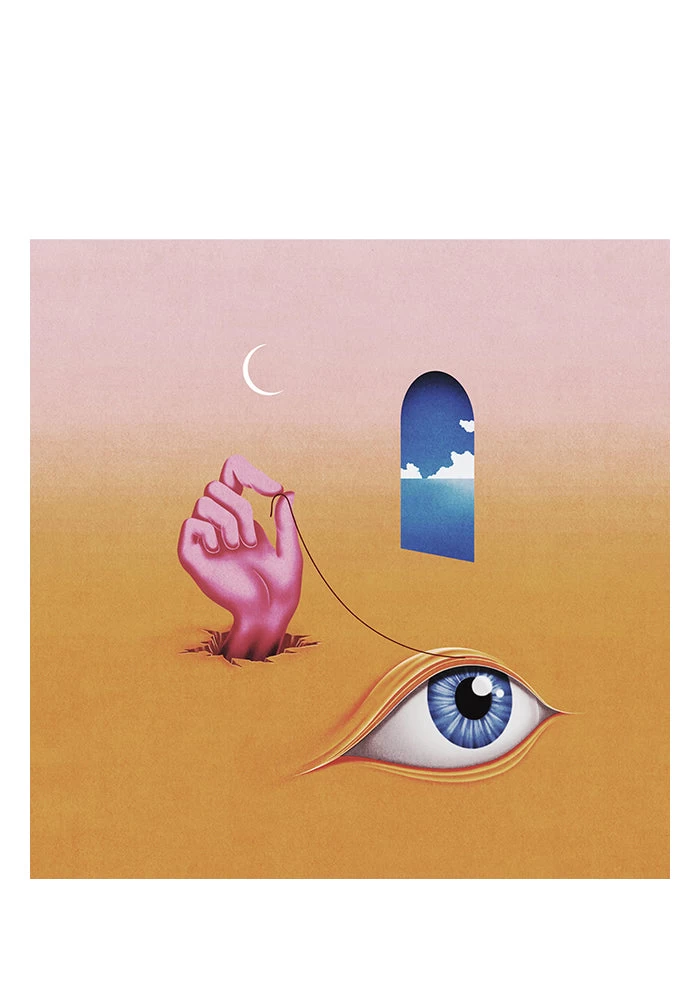
Hideaway CD With Autographed Postcard
Original price was: $16.99.$11.89Current price is: $11.89.
- The home of quality products.
- Elevate Your Shopping Experience
- Hassle-Free Payments
- Shop with Zero Worries

Purchase includes postcard signed by Wavves.
A little over a year ago, Nathan Williams found himself back in San Diego, writing what would eventually become Hideaway, his seventh album as Wavves, in a little shed behind his parents’ house. It was also the place where he made some of his earliest albums, before he became known for his uncanny ability to write songs that sneered at the world while evoking pathos, sympathy, and a deep understanding of how sometimes we’re our own worst enemies, and that can be okay. Williams’ return to his childhood home was not just a symbolic attempt at jumpstarting creativity. It came as a result of a series of major life changes.
Across its brief but impactful nine tracks, Hideaway is about what happens when you get old enough to take stock of the world around you and realize that no one is going to save you but yourself, and even that might be a tall order. The album features Williams’ most universal and urgent songs yet. “Honeycomb” lopes along sunnily, as Williams sings affecting lines like “I feel like I’m dying, it’s cool, it’s great, just pretend I’m okay.” His directness is shocking, and proof that Williams is the kind of songwriter who can capture pain and uncertainty with resonant brutal force. “It’s real peaks and valleys with me,” Williams says. “I can be super optimistic and I can feel really good, and then I can hit a skid and it’s like an earthquake hits my life, and everything just falls apart. Some of it is my own doing, of course.” It’s this self awareness that permeates each of Hideaway’s songs, marking them each as mature reckonings with who he is.
After realizing the material he’d been working on in the hideaway was starting to take shape, Williams, along with bandmates Stephen Pope and Alex Gates workshopped the songs in a series of now-abandoned studio sessions, before linking up with musician and producer Dave Sitek of TV on the Radio to help fully realize their new songs. Williams and Sitek bonded while geeking out over music for hours every day. Sitek would pull up Johnny Cash deep cuts and honky tonk obscurities—songs that sonically don’t have much in common with the music Williams makes, but plumb the same emotional depths of the soul. It was a clarifying moment for Williams, who wasn’t quite sure what direction he wanted to take the songs he’d been working on. “We’d listen to old music and not get much done, but it was really important in the end,” he says. You can hear the result of these sessions on career high points like “The Blame,” which takes its cues from the Replacements’ best moments, but doubles down on a sort of yearning sadness. It’s full of hard earned wisdom and melancholy, and it sounds like nothing else Williams has ever done.
Meanwhile, on the album’s title track, Williams incisively cuts through the pitfalls of empty self-affirmations, his voice straining against lyrics like “I’ll do my best to hideaway, from all of the bullshit chasing me, I don’t care if time’s erasing me, it’s been torture existing this long” In the hands of a less direct performer, it’d be easy to hear this as self-pity, but Williams’ embrace of that hopelessness shines through and becomes something else entirely: an embrace of the comfort that is right in front of him, of making his world small because he need to. Of changing—or not changing—what’s around him because it’s what he has the power to do. “I don’t have it in me to say that things are so much better,” Williams says. “It’s just not my story. It’s good if it’s someone else’s story, but I’ve also learned to realize there just isn’t redemption.” Ultimately, though, Hideaway is not an album about wallowing in depression. It’s about finding a way through all the noise and landing on something that approximates uneasy acceptance.
Be the first to review “Hideaway CD With Autographed Postcard”
Related products

Cassettes & CDs

Vinyl record & CD
Vinyl record & CD
Vinyl record & CD
Vinyl record & CD
Vinyl record & CD
Vinyl record & CD
Vinyl record & CD
Reviews
There are no reviews yet.